



Imagine gathering with friends from across the world to battle dragons, explore enchanting landscapes, and forge a tale that bards will be singing about for years to come—all from the comfort of your own home.
Virtual tabletops (VTTs), where the charm of traditional role-playing meets the innovation and convenience of digital technology, have revolutionized the tabletop gaming scene. But for the uninitiated, they might be a bit much to swallow—tokens, maps, grid size, oh my!
Not to worry, however—we’re here to explain what VTTs are, how they work, and why they might be the perfect solution for your D&D group.
How Do Virtual Tabletops (VTTs) Work?
When you picture a D&D group, you might think of a group of friends sitting around a table, rolling dice, moving miniatures around, and scribbling away on character sheets.

Essentially, a Virtual Tabletop (VTT) replicates this setup in a digital environment, all while providing the same interactive tools you’d use in-person—such as maps, dice, and character trackers—but online, letting you play and manage your game from anywhere in the world.
While every VTT is different, many of them share the following standard features that help translate your RPG sessions into an online space:
1. A Shared Digital Space
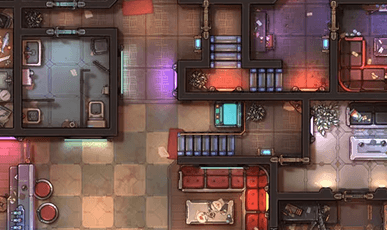
At its core, a VTT provides an online environment where players and game masters can interact. This space usually includes a main interface that displays a grid-based map where actual gameplay unfolds.

Players can often view and manipulate game elements in this space as though they were sitting around a physical table.
2. Character and Game Management
Players can often create and manage their character sheets within the VTT. These platforms usually offer tools for tracking character stats, inventories, and abilities, making it clean and easy to update details during gameplay.
Game masters can also manage multiple NPCs and monsters with these tools, streamlining the administration aspect of the game that might otherwise quickly get overwhelming.
3. Interactive Tools
VTTs are often equipped with a variety of interactive tools designed to enhance gameplay. These can take the form of:
- Map and Environment Features: Players can interact with a dynamic map that might include zoom, scroll, and layer options. Maps can be pre-loaded or custom-made and often include grid overlays for movement and range calculations.
- Token System: Characters, NPCs, and monsters are usually represented by tokens on the digital map. These tokens can be moved around the grid and are usually customizable, letting you use images that closely—or exactly—resemble your character or creature.

- This sort of visual representation can help players keep track of positioning and movement during combat and exploration, as well as visualize their characters, allies, and foes better than verbal descriptions might allow.
- Dice Rolling: VTTs usually have digital dice-rolling mechanics, ensuring a fair and random outcome that can be viewed by everyone at the table—that is, if the game master allows. Modifiers and buffs/debuffs are often calculated automatically, and the dice can be extremely customizable.

4. Real-Time Communication
To help facilitate real-time gameplay, most VTTs integrate some kind of chat function, with some modern VTTs even including voice and video communication.
These features let players discuss strategies, negotiate decisions and share moments of triumph just as they would around a physical table.
5. Resource Sharing
VTTs that provide a marketplace for premade content often allow players and game masters to share important game resources, such as rulebooks and character creation options. This sort of shared access makes sure everyone is on the same page and can reference the same materials with the click of a button.
6. Automation and Rule Enforcement
Many VTTs provide automation features that handle complex calculations and rules, which can speed up gameplay and reduce the load on both players and game masters alike, letting everyone focus on role-playing to their hearts content.

For instance, the VTT might inform the game master privately if a player’s attack roll hits the targeted creature or automatically account for a character’s feature that gives them advantage on an ability check.
7. Atmosphere and Environment
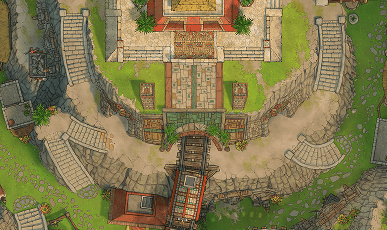
Megalith Gate Animated Map
Perhaps one of the most standout advantages that VTTs have over physical gameplay is their ability to enhance the atmosphere of any session with the following features:
- Music and Sound Effects: Game masters can often control background music and sound effects directly in the VTT, setting the tone of any situation—whether it's the eerie sounds of a haunted forest or the bustling noise of a crowded tavern.
- Visual Effects: Many VTTs offer visual effects like animated fog or rain. Even if the VTT does not support these features, the battlemaps themselves can come animated, adding a dynamic layer to any party’s experience.
- Skill Animations: Some advanced VTTs feature animations that depict animations for spells and attacks, making combat sequences more exciting and understandable for all players.
Why Use A VTT?
VTTs provide a plethora of advantages that make them the platform of choice for new and experienced table role-playing games. Here are some reasons you might consider using a VTT for your next game:
- Global Accessibility: VTTs break down geographical barriers, letting you and your friends come together for your sessions, no matter where you are. Neither state lines nor vast oceans will keep you from embarking on grand adventures with your party.
- Dynamic Play: With custom dice rolling across your screen, gorgeous interactive maps, personalized tokens, mood lighting, and fireballs flying from your characters’ fingertips, a well-setup VTT offers lively and immersive gameplay that can often transcend the physical limits of a traditional tabletop.
- Cost-Effectiveness: TTRPGs can require a significant investment in the form of dice, miniatures, printed books, and maps. VTTs move all of these things to the digital space, often at a fraction of the cost, or even for free, reducing the financial barrier to entry for old and new players alike.
- Game Management: Managing a TTRPG can be complex and time-consuming. VTTs tend to simplify the administrative process—like tracking effects, calculating distance, and adding modifiers—letting game masters and players focus more on the story they want to tell.
- Record Keeping: VTTs often feature some automatic logging of rolls and messages, making it easier to keep track of story moments—especially helpful for long campaigns where detail and continuity are key. It’s also easy to set up a screen-recording software to properly document your adventures.
- Safety and Comfort: Playing from an environment of choice, such as one’s own home, is particularly appealing when in-person meetings aren’t possible or preferred. This can make the TTRPG scene much more accessible for individuals with mobility issues, transportation needs, health concerns, or those who are introverted or anxious in social settings.
What Are The Best VTTs?
The truth is, every table has their own preferences and needs. There isn't one objective best VTT. There is the best VTT for YOU.
Many platforms stand out for their unique strengths and focus.
For instance, Czepeku's own VTT, Alchemy RPG is focused on delivering an immersive and cinematic experience. We designed it to be the best platform for theatre-of-the-mind and narrative-driven play.

Owlbear Rodeo is lightweight, easy to set up and easy-to-use. It's an intuitive platform that also has plenty of optional extensions for additional features.
FoundryVTT is known for its deep customizability, including customization for tokens, maps, macros and effects, supported by a strong modding community. It's great for tables that prefer a lot of automations and tactical tools.
The best way to find the right VTT for you is to try them out!
You're Invited To Try Alchemy RPG!
Alchemy is a free VTT. No paywalls, no limits, no catches. You can sign up for a free account and create unlimited games, characters, universes, and more.